How racing games get harder and how to prepare for it
Most racing and driving games start gently. The first stretch is forgiving, the gaps are wide and you have time to look around. Then something changes. The cars come closer together, the road moves faster, the ground asks more of you, or the run simply goes on long enough that your attention starts to wander. Knowing which of these is making a game harder tells you what to practise.
The four ways difficulty grows
Difficulty in this kind of game usually arrives through one of four doors: more traffic, higher speed, rougher ground, and longer runs. They often overlap, but each one stresses a different skill. Traffic tests how well you read gaps. Speed tests how early you decide. Rough ground tests how gently you use the controls. Length tests whether you can stay steady without drifting into bad habits.
More traffic means smaller gaps
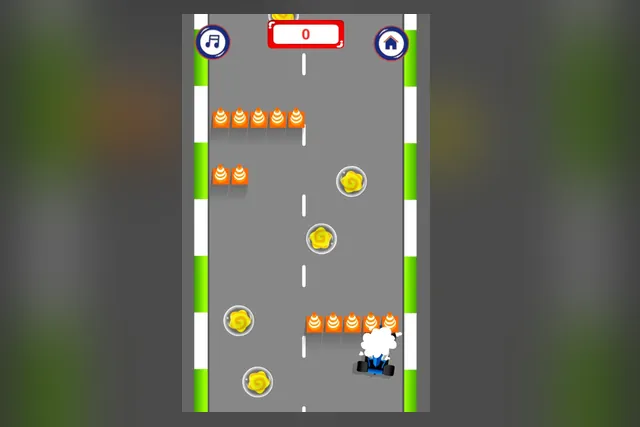
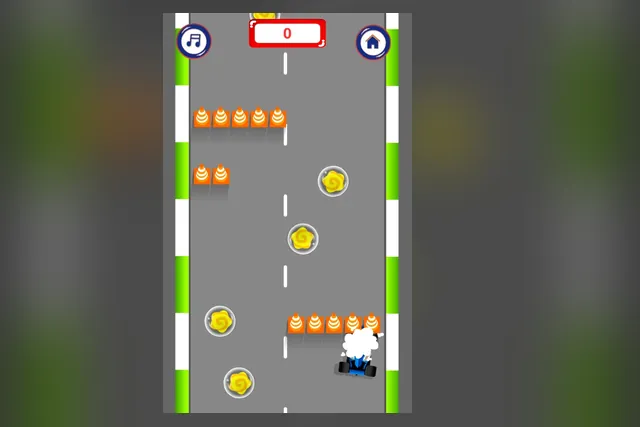
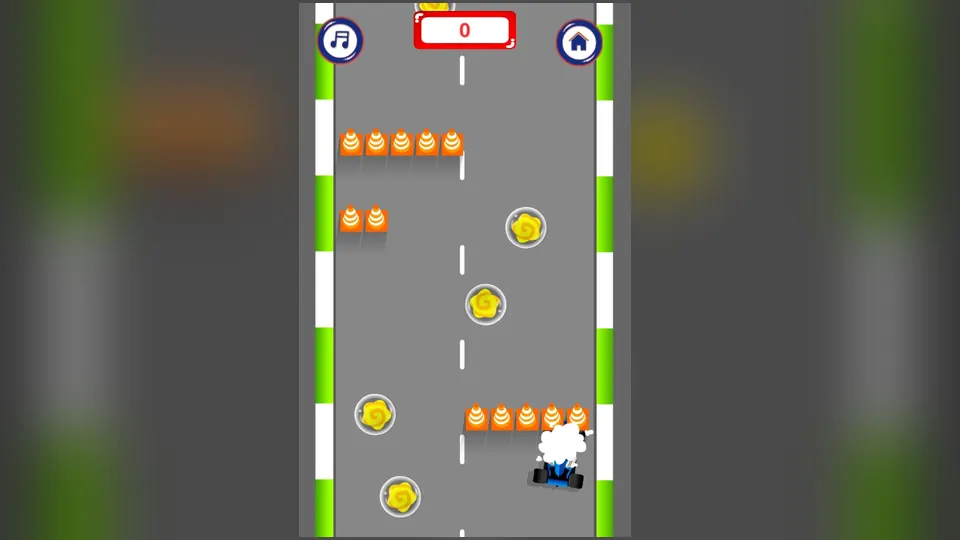
When the road fills up, the gaps between obstacles shrink and the cost of choosing the wrong one rises. Sidewinder is a clear example of a screen built around this. A blue open-wheel car sits near the bottom of a grey road, rows of orange cones come toward it, and gold coins sit inside little bubbles along the way. The whole task is choosing a gap early and moving into it.
How to prepare
- Look at the gap between cones before you look at the coins.
- Move early instead of at the last moment.
- Take a coin only when the path past it is clear.
- Keep the car near the middle when nothing is close, so either side stays open.
These habits scale. A middle position and an early decision work just as well when the rows become more frequent, which is why they are worth building while the road is still quiet.
Higher speed means less time to choose
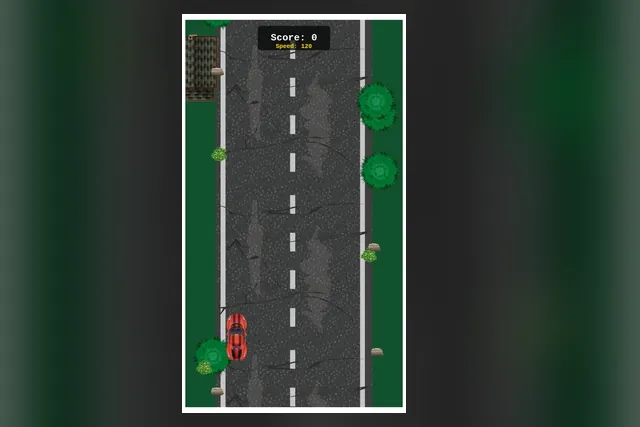
Speed does not change the road, but it changes how much of it you can react to. In Wrong Side Driving Car Game you drive a red sports car up a cracked road and meet traffic coming straight at you. The score and a speed readout sit at the top of the screen, and the speed climbs the longer you survive. That leaves the road giving you less time to choose a side.
How to prepare
Make small moves ahead of time, because a late, big swerve leaves no room to correct. Look far up the road rather than at your own car, since oncoming traffic arrives sooner as the speed rises. Pick up power-ups only when the path to them is clear. A missed one costs less than a collision. If the way ahead is open, stay near the middle of the road so you can go either side.
One useful practice idea is to treat the speed readout as a clock for your own habits. When the number gets high and you start making sudden moves, you have found the point where your looking-ahead has fallen behind. On the next run, try to look slightly further up the road at that same speed.
Longer runs ask for steadiness
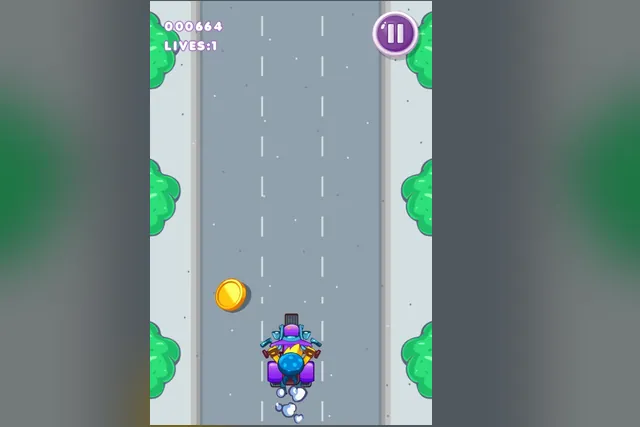
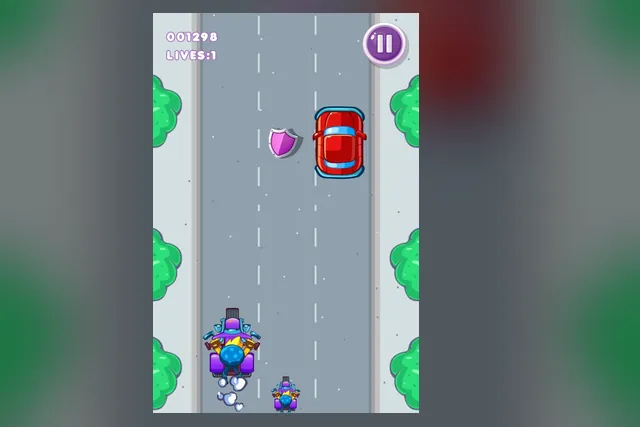
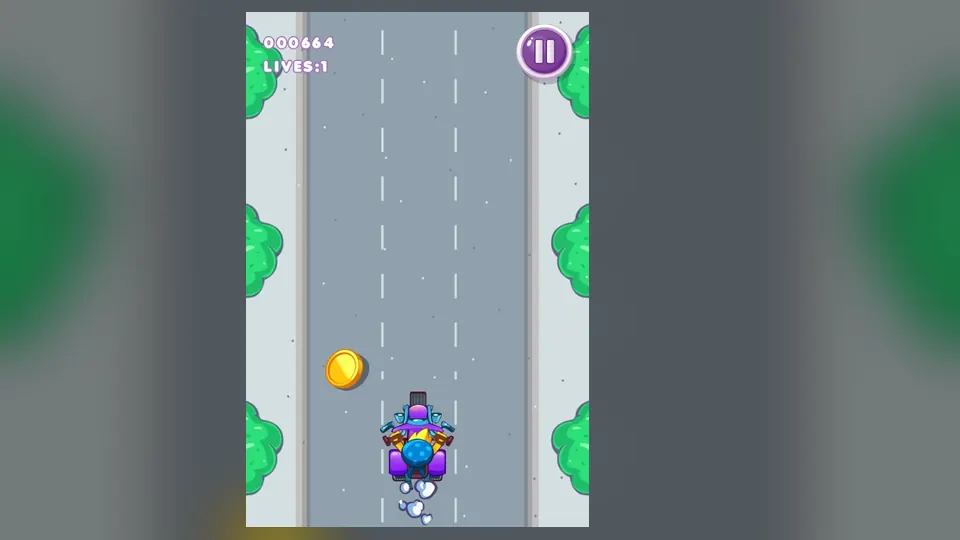
Some games get harder simply because they do not end. On the Road Endless sends a purple bike up a wide grey road that never stops, with a lives counter showing how many chances remain and a score that you try to beat on the next attempt. The art is clean and simple, so the screen stays easy to read as the challenge builds. What changes over a long run is not the picture but you: concentration slips, moves get bigger, and small errors stack up.
How to prepare
Keep the bike near the centre of the road when nothing is coming, so you can reach either side. Glance at the lives counter after every close call and ride a little more carefully when it drops. Look ahead up the road rather than only at the bike, and prefer small, early moves over sudden ones. On a touch screen especially, small moves are easier to control. Because the goal is to beat your own best score, compare a run with your previous one, not with an imagined perfect one.
Rougher ground asks for gentler hands
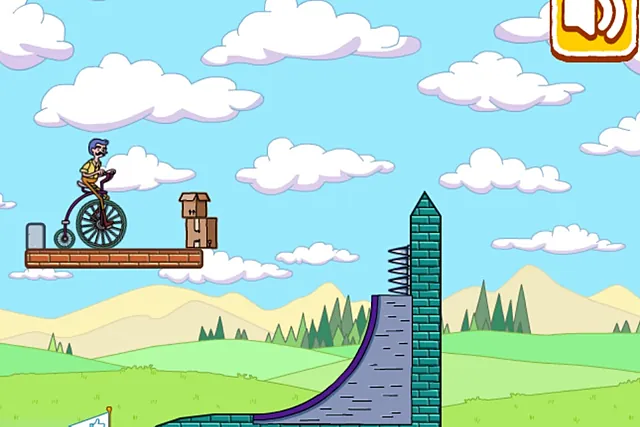
When the ground is no longer a flat strip, holding a control down stops working. Dumb Riders is built around this. You steer a skateboard, a golf cart or an old bicycle through cartoon levels with ramps and slopes, and each ride is a short problem of balance and timing rather than a long race. The rider has to get from the starting platform to the end of the level in one piece.
How to prepare
- Look at the whole level before you move, since the ramps are part of the layout.
- Judge each ramp before you reach it.
- Tap gently on a slope instead of holding a key down.
- Switch vehicles when a level feels wrong for the one you picked.
- Once the set levels feel familiar, try levels made by other users, which give you new ground to read.
The same idea carries over to any game with uneven terrain. Light, brief inputs give you room to correct, while a held input commits you to whatever happens next.
Which kind of difficulty are you facing
| What grows | Example | Best practice |
|---|---|---|
| Traffic | Sidewinder | Pick the gap early |
| Speed | Wrong Side Driving Car Game | Look far ahead |
| Run length | On the Road Endless | Small, steady moves |
| Rough ground | Dumb Riders | Tap, do not hold |
A practice plan that works for any of them
You do not need long sessions to get better. A few focused runs beat an hour of repeating the same mistake.
- Begin with a calm warm-up run. Use it to settle your eyes up the road, not to chase a score.
- Pick one skill for the session, such as choosing the gap earlier or using lighter inputs.
- When a run ends, note the moment things went wrong. It is usually a few seconds before the actual mistake.
- Replay with one small change aimed at that moment.
- Stop while you are still making clear decisions. Tired hands lead to bigger, later moves, which is the habit you are trying to remove.
Setting up so the later stretches feel manageable
A few general habits help in nearly every driving game. Sit so that you can see the whole play area without scrolling or squinting. Make sure the controls you want to use are ready before the run begins. Keep your hands relaxed, since tense hands produce sudden moves. And when a stretch feels too hard, slow down your thinking, not your hands: decide a little earlier and move a little less.
FAQ
Why does a game feel fine for a minute and then suddenly hard?
Usually one of the four factors has crossed a threshold. The gaps got smaller, the speed left less decision time, or the length of the run began to wear down your focus. Naming which one it was is the first step to fixing it.
Is it better to practise the early part again and again?
It helps for warming up, but the later stretch is where the new demands are. Spend some runs deliberately paying attention to what changes as the round goes on, such as the pace of the traffic or your own tendency to move late.
Should I chase coins while I am still learning?
Only when the path is clear. Gaps and timing are the skills that carry over to harder stretches, and coins are a bonus on top of them. Learn the road first, then add the extras.